
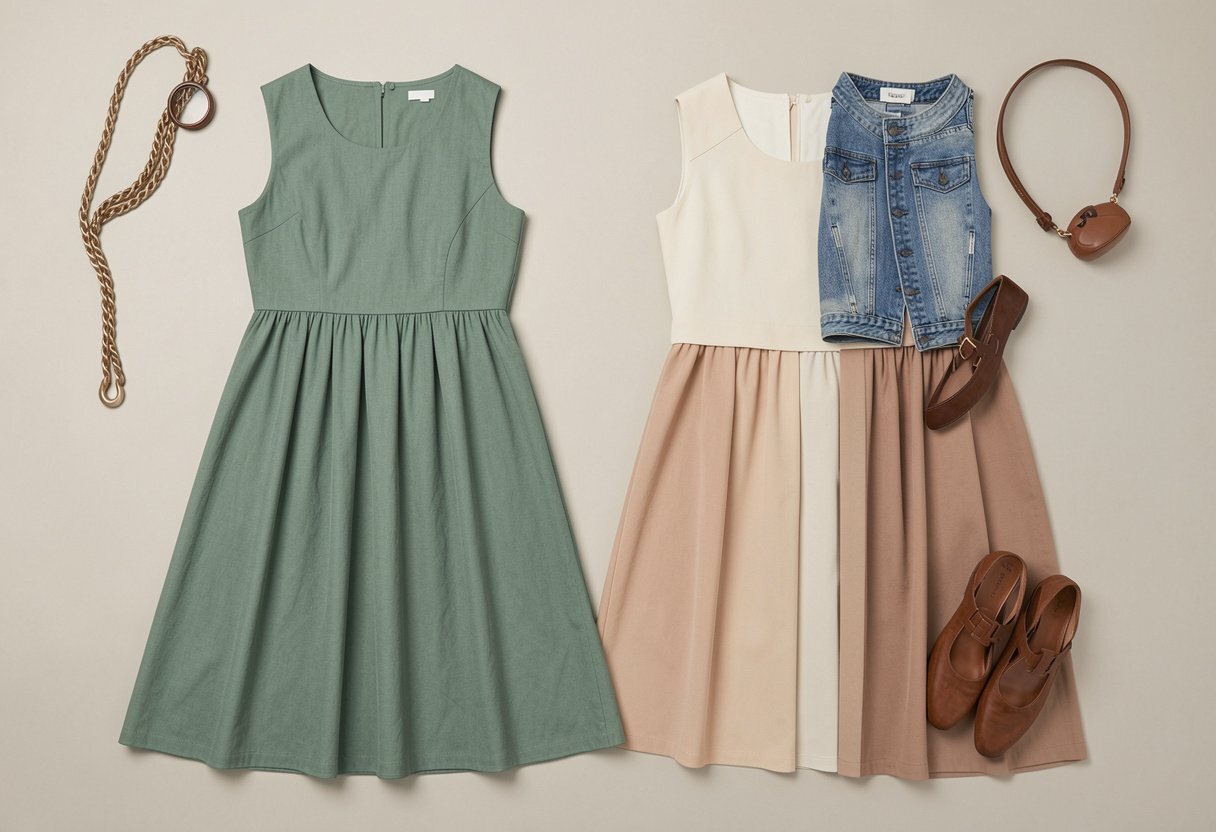
A dress is the most efficient piece in a wardrobe, one garment, dozens of outcomes, if you know how to work it. The gap most people hit isn't taste, it's technique. You can love a dress and still not know what to do with it beyond wearing it exactly as it left the shop, on repeat, in the same three ways.
The techniques that make a dress genuinely versatile are learnable, and they're the same handful of principles regardless of the specific silhouette in front of you. This guide walks through them properly, proportion, layering, and accessorising, with enough detail to actually apply, not just a checklist to skim. If you're working with a specific dress type, we've built dedicated guides for those too, linked throughout, but everything here is the foundation those guides build on.
The Proportion Principle
Before layers or accessories, the single most useful thing to understand is proportion, where you create visual breaks on the body, and why it matters more than almost any other single decision you make when getting dressed.
The rule of thirds: avoid splitting your silhouette exactly in half. A long, loose dress worn with nothing to break it up reads as one uninterrupted block from shoulder to hem, comfortable, but visually flat. Add a belt at the natural waist, or a cropped layer over the top, and you create a one-third to two-thirds ratio instead. That single adjustment is often the difference between an outfit that looks unplanned and one that looks considered, even though the dress itself hasn't changed.
Balancing visual weight: pair lightweight or fluid fabrics with something structured. A soft, draping dress benefits from a tailored blazer or a leather jacket layered over it, the contrast in weight and texture is what makes the outfit feel deliberate rather than accidental. The inverse works too: a heavier, more structured dress can be softened with a fine knit cardigan or an unlined jacket, so the whole look doesn't feel stiff.
Where you place the visual break matters as much as whether you create one at all. A belt sitting at the natural waist reads differently to one sitting at the hip, the higher placement elongates the leg line, the lower placement shortens the torso. Neither is wrong, but they produce genuinely different silhouettes from the same starting dress, and it's worth trying both before settling on a default.
|
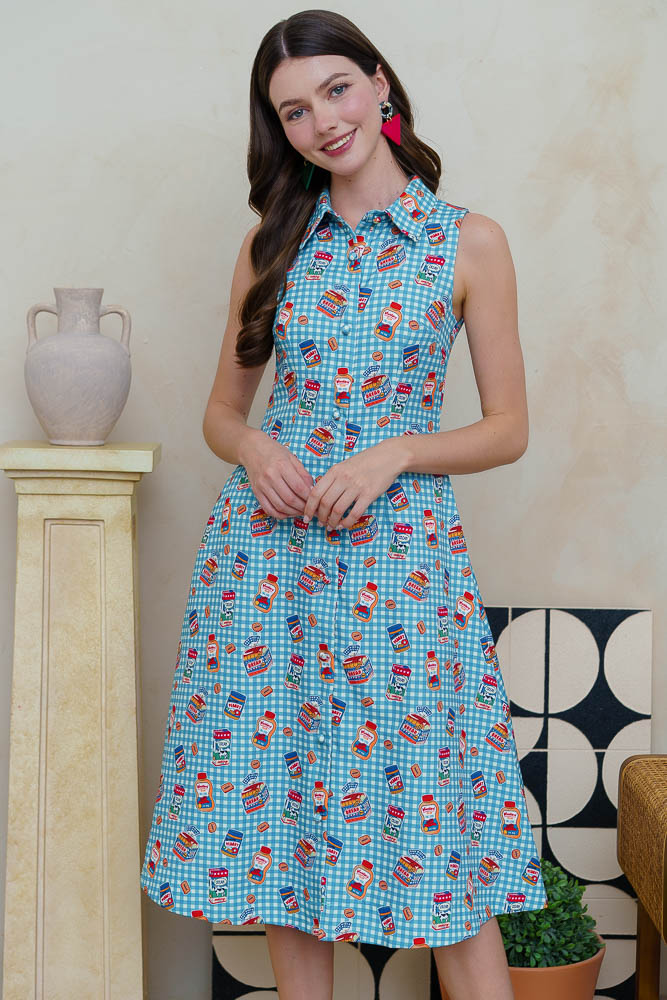
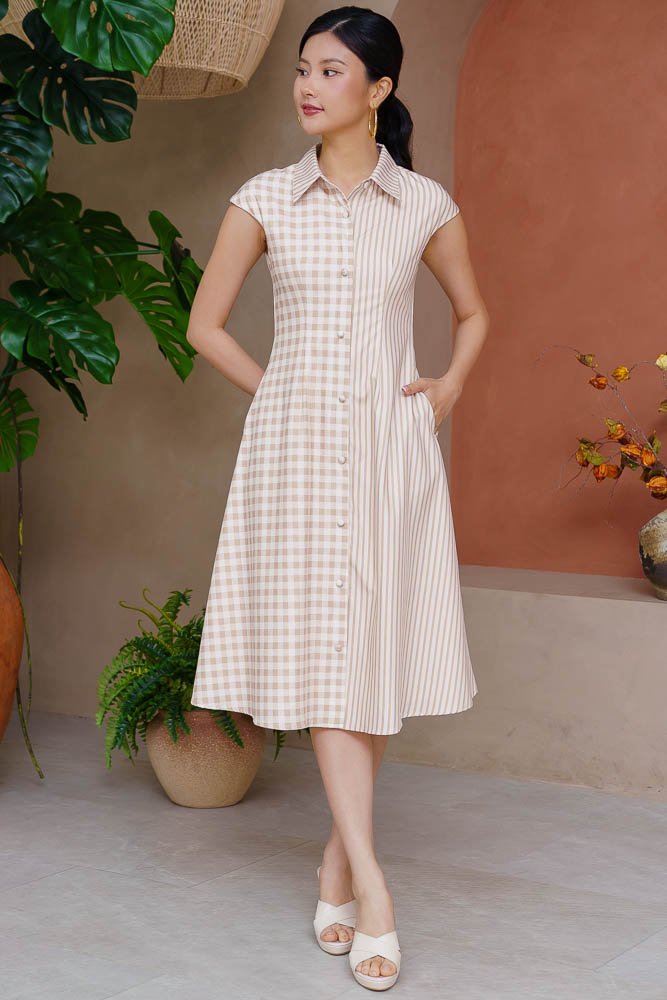
✦ Sunday Pantry Gingham Shirt Dress (Cerulean)
A shirt dress already has structure built in through its collar and button placket, the proportion is closer to sorted, which makes it a reliable starting point if you're new to these principles. |
Layering: The Fastest Way to Change a Dress
Layering is the single most transformative styling tool for a dress, and it works in both directions, adding warmth and structure, or stripping a look back to something lighter and more relaxed. Most people default to one direction and stop there; the real versatility comes from being comfortable moving both ways with the same piece.
Adding Structure
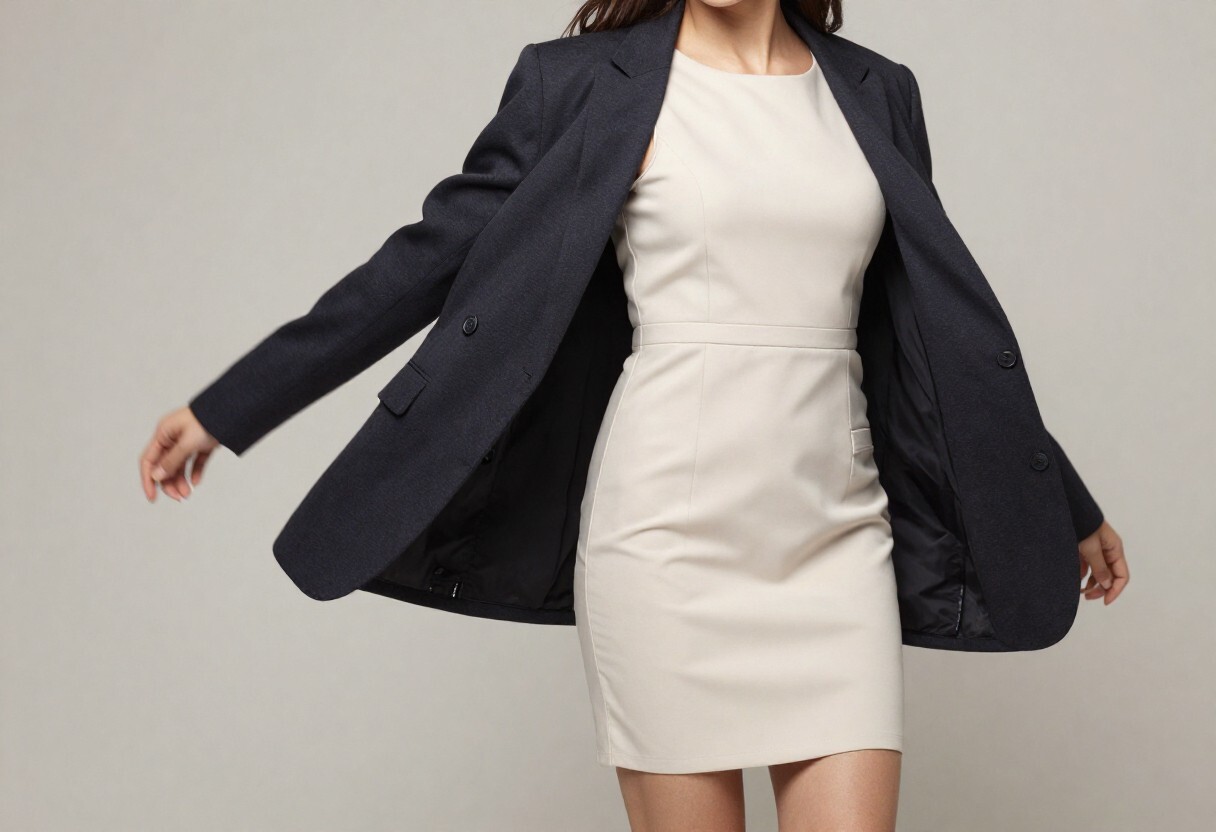
A blazer over a dress instantly shifts the register toward smart or office-appropriate. Choose a blazer that contrasts slightly with the dress fabric, a tailored piece over something soft and fluid reads as considered, not mismatched. The shoulder structure of a blazer also does quiet work here: it squares off the silhouette and adds a sense of intention that a dress worn alone sometimes lacks, particularly for settings where you want to read as put-together rather than simply dressed.
Adding Warmth Without Losing the Silhouette
A fitted turtleneck or a simple long-sleeve top underneath a sleeveless or thin-strapped dress keeps the original silhouette visible while making the piece wearable in cooler settings, indoors with strong air conditioning, or an overcast evening. The key is fit: a bulky or oversized base layer will distort the shape of the dress on top of it, so look for something close-fitting that essentially disappears under the dress's own lines.
Read Also: How to Choose a Dress for Your Body Shape
Dressing Down a Formal Piece
Swap heels for flats, add a denim or utility jacket, and the same dress that worked for an evening event moves comfortably into daytime. The dress doesn't change, only what surrounds it does. This is worth knowing specifically because it changes how you shop: a slightly more formal dress than you think you need often earns its place in the wardrobe precisely because it can be dressed down, while a purely casual piece rarely dresses up convincingly in the other direction.
|
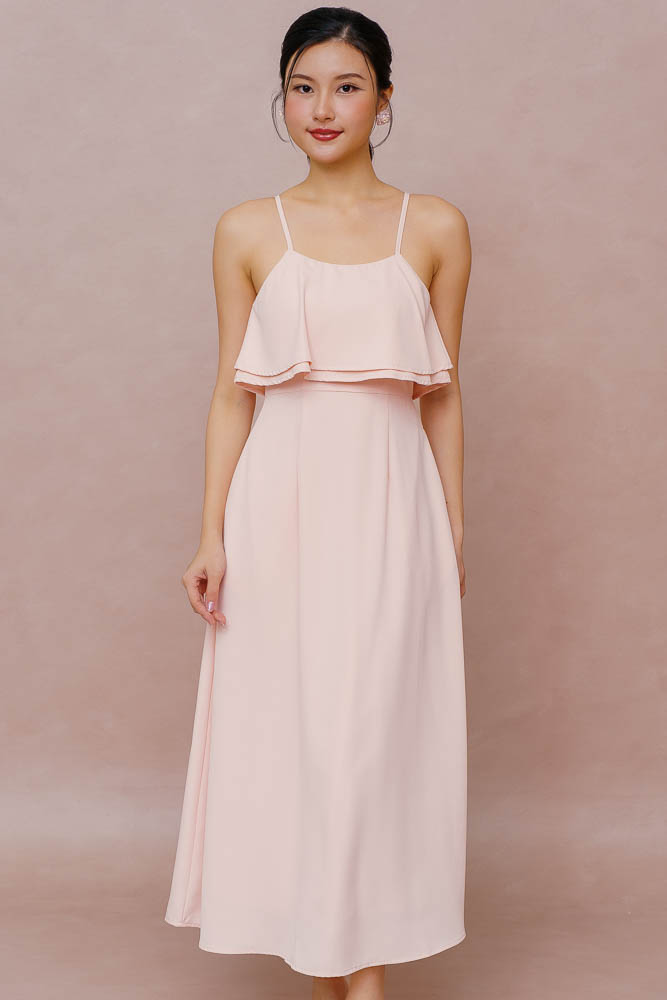
✦ Maxine Padded Midaxi Strap Dress (Pink)
A maxi silhouette is one of the more versatile pieces to apply these techniques to, see our dedicated maxi dress styling guide for the full breakdown. |
Accessorising: Footwear, Bags, and Jewellery
Footwear
Footwear does more to set the tone of a dress than almost anything else you add. Heels formalise, flats relax, sneakers or boots add an unexpected edge. If a dress feels too polished for the occasion, the fastest fix is usually at the feet, not the fabric. This is also the cheapest styling lever in terms of effort, changing shoes takes seconds and can shift an entire outfit's register more than swapping any other single piece.
Bags
Match the bag to the level of formality you're aiming for, a crossbody for hands-free, casual wear, a structured clutch for anything more formal. A bag that's too casual or too formal for the rest of the outfit is one of the quickest ways to undercut an otherwise good look, and it's a mismatch people notice even when they can't articulate why an outfit feels slightly off.
Jewellery
If the dress carries a bold print or a lot of embellishment, keep jewellery minimal, small hoops or a single delicate chain. Save layered or statement pieces for simpler, solid-coloured dresses where they have room to stand out. The general principle: the dress and the jewellery shouldn't compete for the same visual attention. One should lead and the other should support.
|
✦ Eugenie Cloudlane A-Line Dress (Buttercream)
A printed A-line silhouette is a good example of a dress that already carries visual interest, pair with minimal jewellery and let the print lead. |
A Quick Framework for Choosing How to Style a Dress
When you're not sure where to start, work through it in this order:
- Decide the formality level you need, this determines footwear and outerwear before anything else, and settling this first prevents the second-guessing that happens when you try to build an outfit from accessories inward.
- Check the proportion, does the dress need a belt, a cropped layer, or nothing at all? Try it both ways before deciding; the difference is often more noticeable than expected.
- Layer for the setting, structure for office or formal, softness for casual, warmth for air conditioning or cooler evenings.
- Accessorise last, and only as much as the dress needs. A well-proportioned, well-layered dress rarely needs more than one or two additions, if you find yourself reaching for a third or fourth accessory to make the outfit feel finished, it's worth going back to step two rather than continuing to add.
Read Also: Maxi Dress vs Midi Dress: What's the Difference
Choosing the Right Dress Type to Style
These principles apply across every dress silhouette, but the specifics shift depending on what you're working with. A flowing maxi dress needs different proportion handling to a structured shirt dress, the fabric weight, the length, and the natural drape of each silhouette change how the same four-step framework plays out in practice. If you're starting from a specific piece rather than general principles, these dedicated guides go further:
For long, flowing silhouettes: How to Style a Maxi Dress
For printed, heritage-informed pieces: How to Style a Batik Dress
|
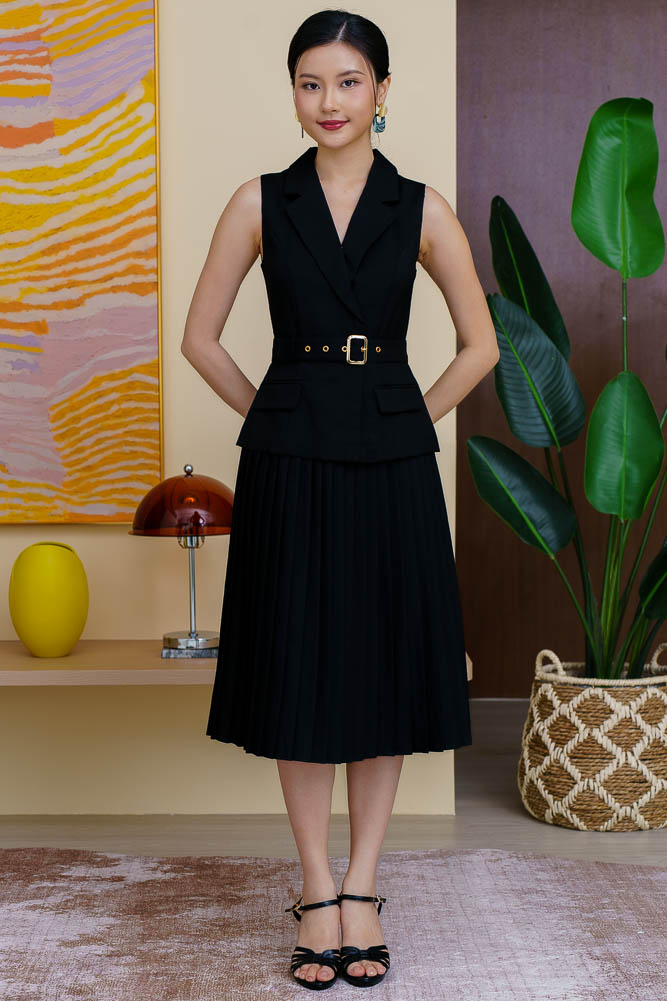
✦ Olympia Pleated Blazer (Dress)
Textured, pleated pieces like this one hold their shape particularly well when belted at the waist, a direct application of the proportion principle above. |
Once you understand these fundamentals, styling any dress becomes a matter of application rather than guesswork. Explore Faire Belle's dress collection to put them into practice.
FAQs How to Style a Dress: Outfit Ideas for Every Type
Can one dress really work for both casual and formal settings?
Yes, provided the dress itself isn't at an extreme end of either category. A mid-weight dress in a solid colour or simple print has the most range, it can be dressed up with heels and structure, or down with flats and a casual layer. Very formal fabrics like satin or heavily embellished pieces have less flexibility toward casual, and very casual jersey or cotton pieces have less flexibility toward formal, but most dresses in between can genuinely stretch across both.
What's the one accessory that changes an outfit the most?
Footwear, consistently. Heels, flats, and sneakers each signal a completely different formality level and effort, and swapping between them takes less time than changing any other single element of an outfit. If you're short on time and need to shift a look, start there before anything else.
How many layers is too many for one dress?
As a general guide, two layering pieces is usually the practical ceiling for a single outfit, for example, a cardigan and a scarf, or a jacket and a belt. Beyond that, the outfit tends to start looking effortful rather than intentional, and the dress itself gets visually lost under everything added on top of it.
Should I match my belt to my shoes?
It's a classic pairing and a safe default, but not a rule. A contrasting belt, a different colour or texture to your footwear, can add more visual interest than a matched set, provided the rest of the outfit is kept simple enough to support the contrast without feeling busy.