
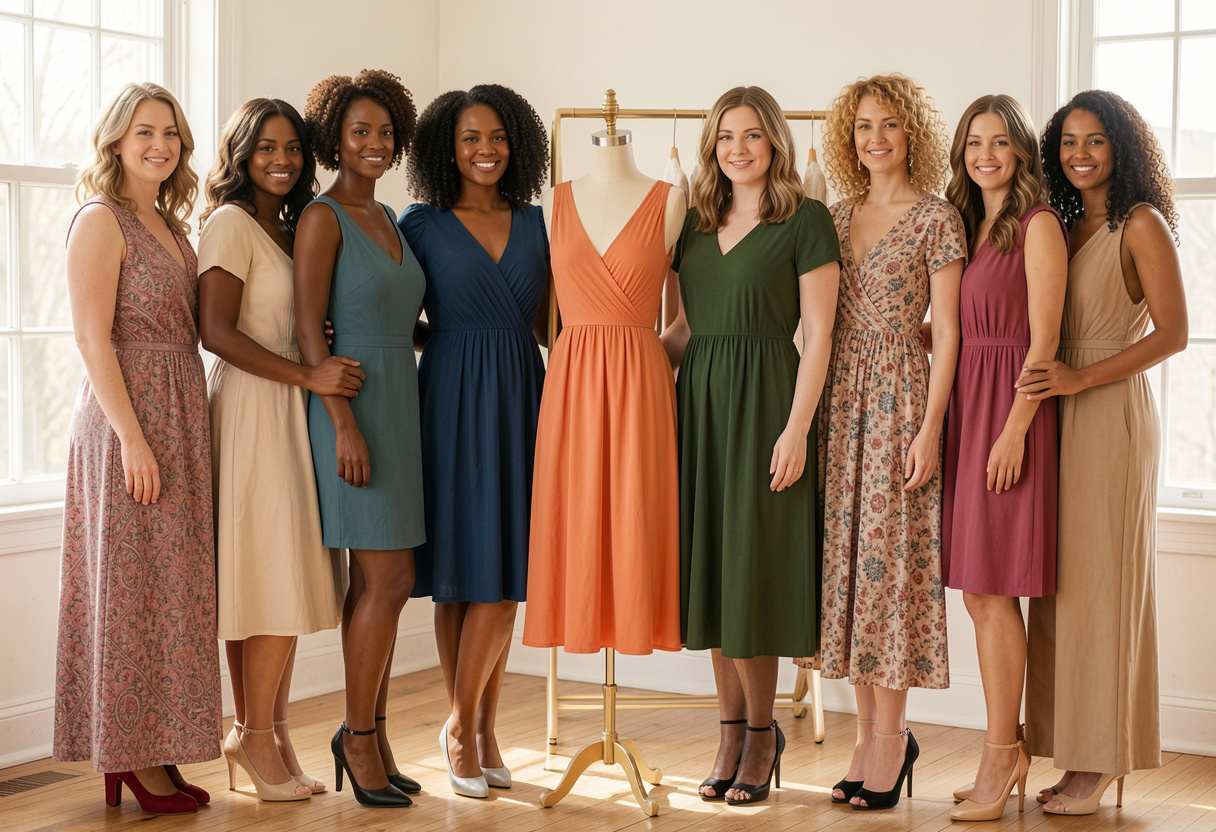
Every body is different, and the honest starting point for dressing well isn't a set of rules to follow but a small amount of self-knowledge: understanding your own proportions well enough to know which silhouettes work with them, not against them.
This guide walks through the main body shape categories, what tends to work for each, and how to figure out where you sit if you're not sure. None of this is about hiding anything, it's about proportion and balance, the same principles that make any outfit look considered rather than accidental. The goal is a working knowledge you can apply the next time you're standing in front of a rail trying to decide what's actually worth trying on.
Finding Your Body Shape
Before choosing a silhouette, it helps to know roughly where your proportions sit. Take three measurements, shoulders or bust, waist, and hips, using a flexible measuring tape, standing straight in front of a mirror in fitted clothing or undergarments so the numbers are accurate.
- Hourglass: shoulders/bust and hips are roughly equal in width, with a clearly defined, narrower waist.
- Pear (triangle): hips are noticeably wider than shoulders or bust, typically with a defined waist and narrower shoulders.
- Apple (round): fuller through the midsection, with less waist definition and an upper body that carries more fullness than the hips.
- Rectangle: bust, waist, and hips are close in width, with minimal natural waist definition and a straighter overall line.
- Inverted triangle: shoulders and bust are broader than the hips, often with a fairly straight or minimally defined waist.
Most people find they're not a perfect match for any single category, and that's completely normal, these are reference points, not strict boxes. Use whichever description is closest as your starting point, then adjust the specific recommendations based on what you notice actually works when you try things on.
Hourglass
The goal: show off natural curves without adding bulk.
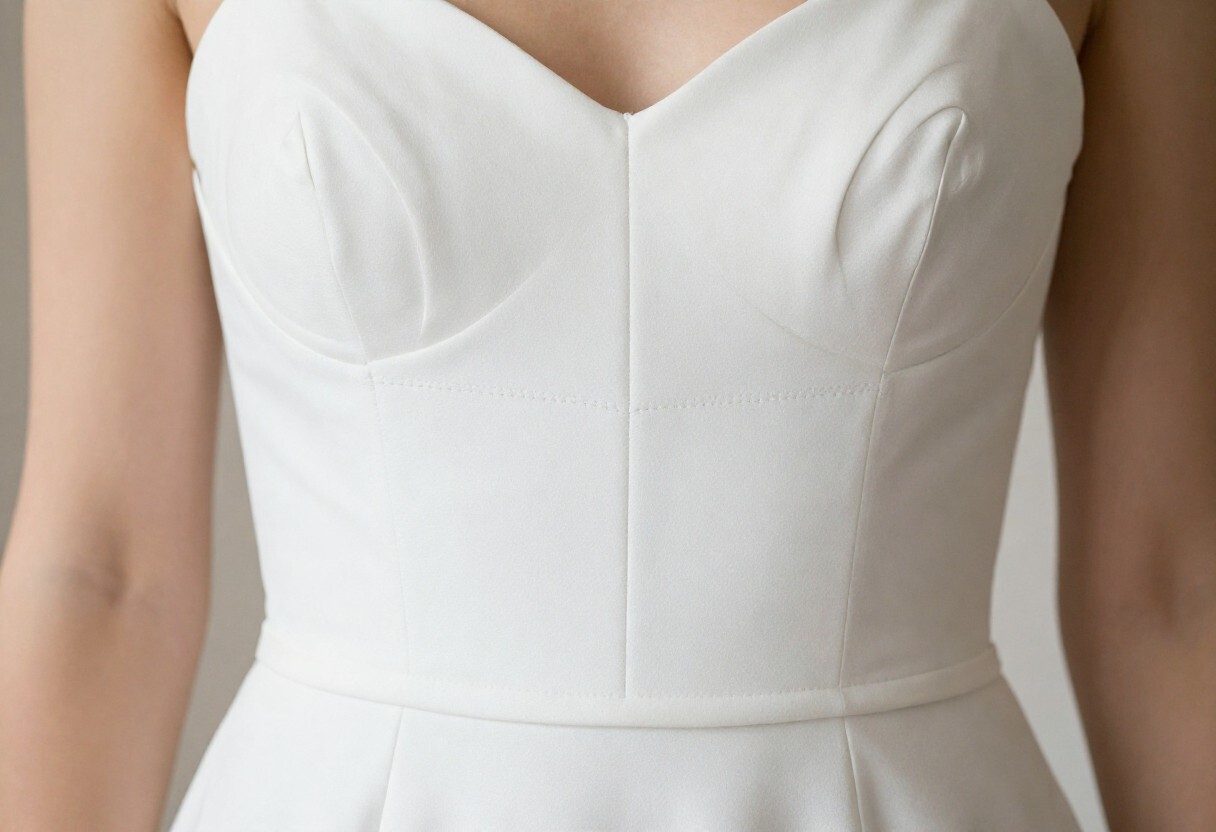
Wrap dresses, bodycon styles, and fit-and-flare cuts all work well, anything that cinches at the narrowest point of the waist. Sweetheart or V-necklines complement this shape particularly well, since they echo the natural curve of the bust without adding extra volume. Avoid boxy or entirely straight-cut silhouettes, which tend to hide the waist definition that's the most flattering feature of this shape rather than working with it.
Pear / Triangle
The goal: draw attention upward toward the shoulders and face, while allowing the skirt to skim over the hips.
A-line skirts are the classic choice here, along with off-the-shoulder necklines or dresses with structured shoulders or statement sleeves, anything that adds visual width above the waist to balance a fuller lower half. Fabrics with a bit of structure in the skirt, rather than clingy jersey, tend to skim rather than cling through the hip area, which is usually the more comfortable and more flattering choice.
|
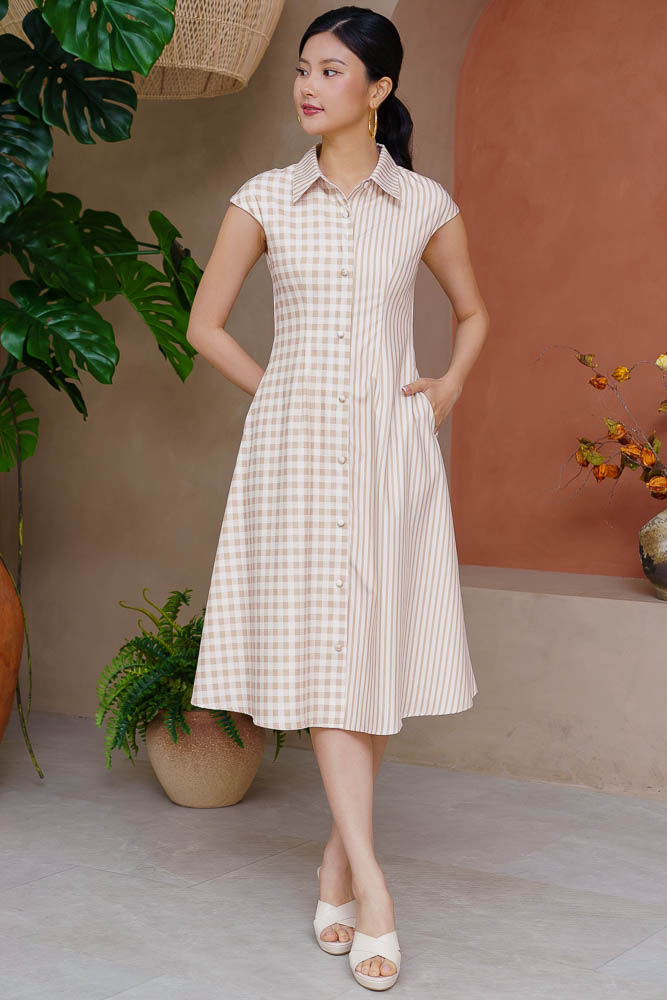
✦ EUGENIE CLOUDLANE A-LINE DRESS (BUTTERCREAM)
A classic A-line cut, fitted through the bodice, gently flaring from the waist. One of the most consistently flattering silhouettes across body shapes, and a strong starting point if you're new to this. |
Apple / Round
The goal: elongate the torso and draw the eye toward the legs or bust rather than the midsection.
Empire waists, where the seam sits just under the bust, are especially effective, along with flowy A-line silhouettes and wrap dresses. V-necks help break up the chest area visually, while a floating A-line shape moves past the stomach without clinging. Avoid dresses that cinch tightly at the natural waist, which sits at the fullest part of this body shape and tends to work against the silhouette rather than for it.
Rectangle / Column
The goal: create the illusion of curves and define the waist.
Shift dresses styled with a belt, belted shirt dresses, or dresses with ruching and asymmetrical hemlines all work to introduce shape. Fit-and-flare styles or dresses with peplum detailing add volume at the bust and hip, giving the waist more definition by contrast. This is also the body shape with arguably the most silhouette freedom, a straighter frame carries almost any dress cut well, so the styling choices here are more about adding interest than correcting proportion.
|
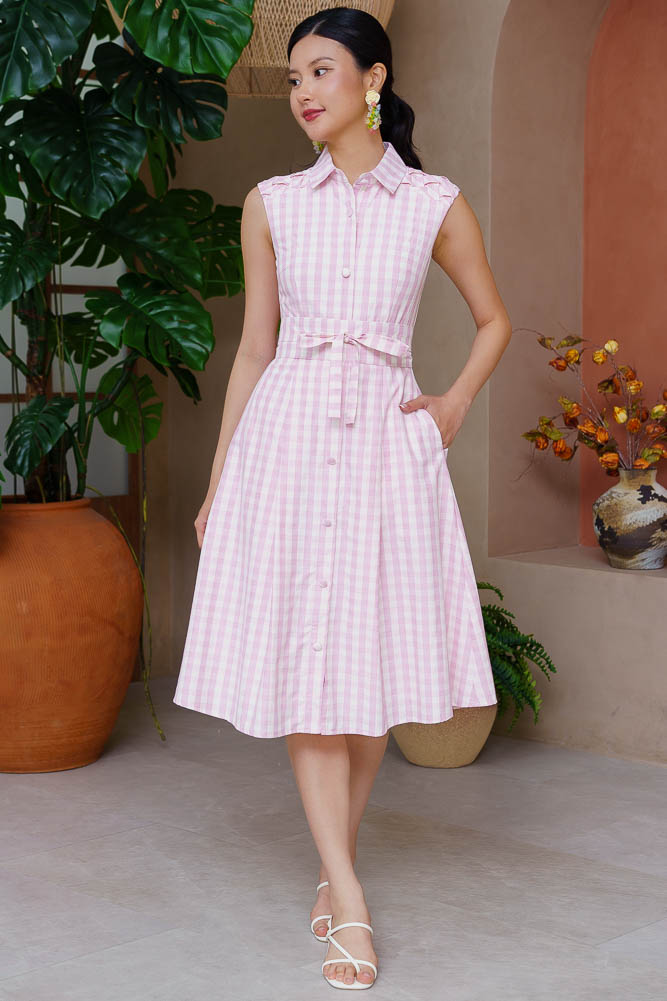
✦ TALIA GINGHAM COTTON DRESS (PASTEL PINK)
A shirt dress with a defined waistline and the option to cinch further with a belt, a practical way to introduce shape on a rectangle frame. |
Inverted Triangle
The goal: soften broader shoulders and add volume to the lower half to bring the silhouette into balance.
Drop-waist dresses, A-line cuts, and dresses with flared or pleated skirts all help here. V-neck or scoop necklines are the better neckline choice, they draw the eye vertically down the body rather than emphasising shoulder width. Avoid strong shoulder details like puffed sleeves or structured epaulettes, which add width exactly where this shape already carries the most volume.
|
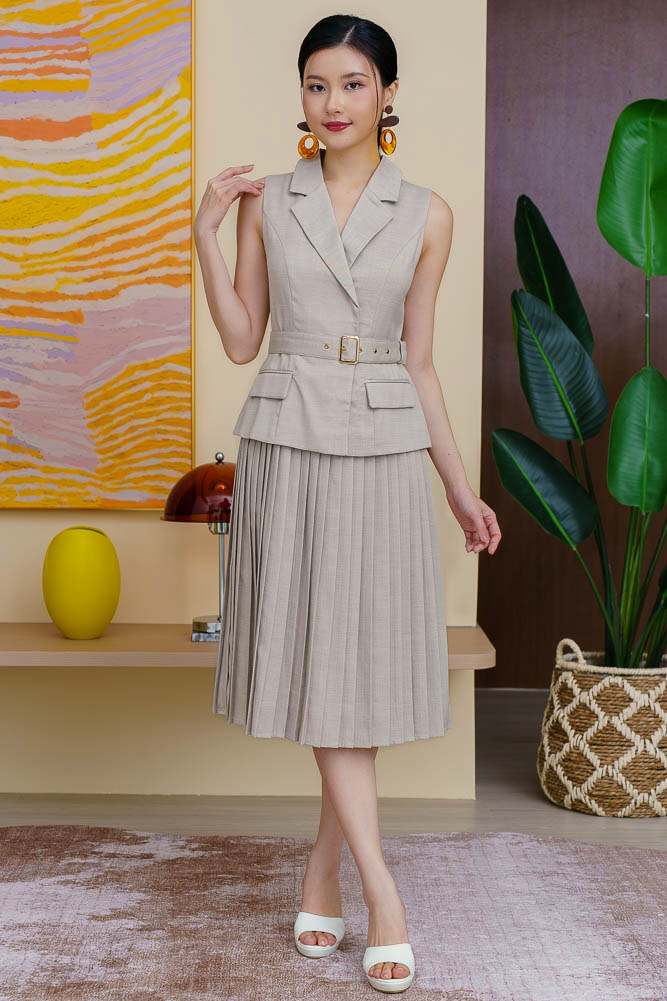
✦ OLYMPIA PLEATED BLAZER DRESS (LIGHT SAND)
The pleated, textured skirt on this shirt dress adds visual volume at the hem, a considered choice for balancing broader shoulders. |
A Note on Fit Over Rules
These are starting points, not requirements. Body shape guidance works best as a set of things to try, not a set of things you're locked into, the same silhouette can read completely differently depending on fabric, fit, and how confidently you wear it. If a dress makes you feel genuinely good, that instinct is worth trusting over any framework, and it's worth revisiting these categories periodically too, since bodies and preferences both shift over time.
Read Also: Style a Dress for Plus Size Women
If you're specifically working with a cheongsam rather than a Western dress silhouette, our cheongsam body type guide covers the same principles applied to that garment's construction.
For the broader techniques on layering and accessorising once you've chosen your silhouette, see How to Style a Dress.
Explore Faire Belle's dress collection to find silhouettes suited to your shape.
FAQs How to Choose a Dress for Your Body Shape
What if I don't fit neatly into one body shape category?
That's the case for most people, and it's completely normal. These categories are reference points rather than exact boxes, use whichever is closest to your proportions, then adjust based on what you notice actually works when trying pieces on. A combination approach, borrowing recommendations from two adjacent shapes, often works better than forcing a single category.
Does body shape change over time?
Yes, and it's worth reassessing periodically rather than assuming your shape is fixed. Life stages, weight changes, and simply ageing can all shift where your proportions sit, so a silhouette that worked well for you five years ago may not be the best choice today, and that's entirely normal.
Are certain necklines universally flattering?
V-necks come closest to universal, since they draw the eye vertically and work with most face and body shapes. That said, 'universally flattering' still depends on personal proportion and preference, a scoop or sweetheart neckline can work just as well depending on your particular shape and what you feel most confident in.
Should I dress for my body shape or just wear what I like?
Ideally both, but they're not in conflict as often as people assume. Body shape guidance is meant to expand your options by explaining why certain cuts feel more comfortable or flattering, not to restrict what you're allowed to wear. If something outside the 'recommended' list genuinely makes you feel good, that's a valid reason to wear it.