
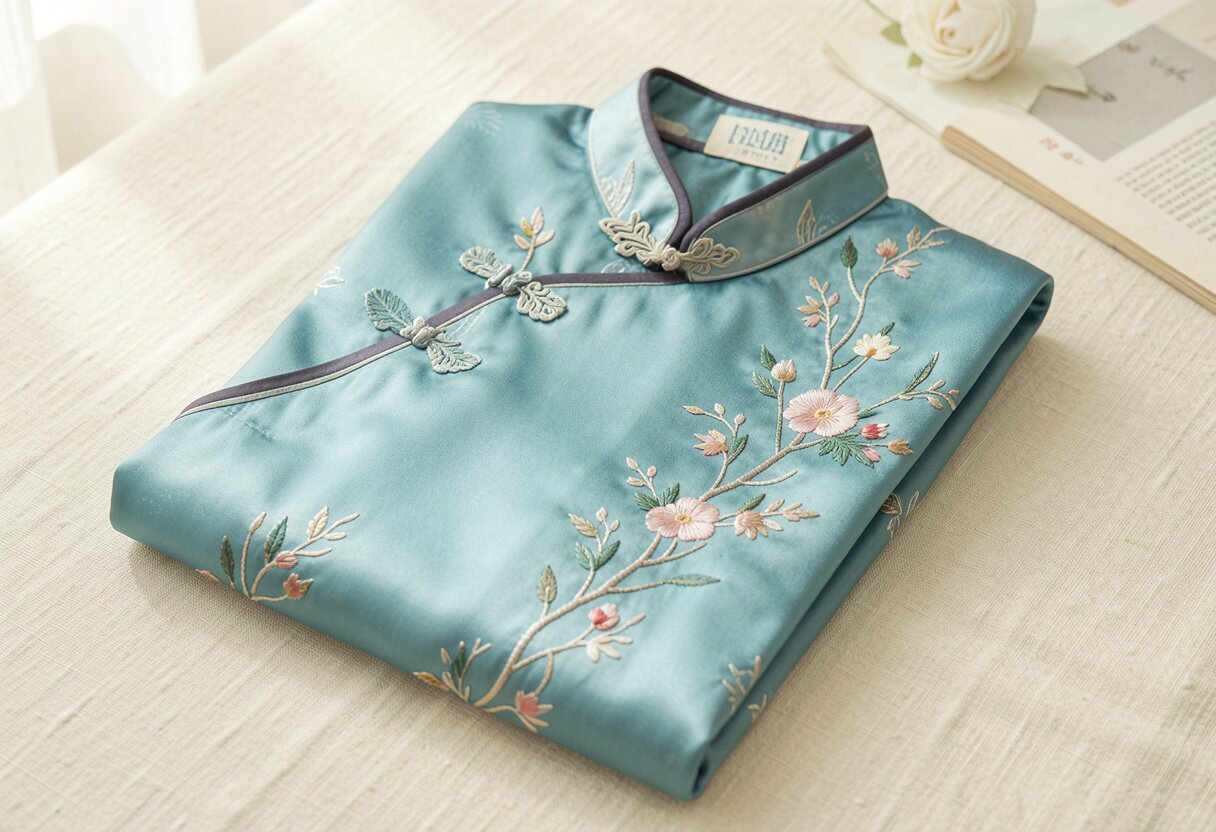
How to Care for Your Cheongsam: Washing, Storage & Maintenance Tips
A cheongsam is not a wash-and-hang garment, but it is far less intimidating to care for than most people think. The single most important factor is knowing your fabric. What works perfectly for a cotton-blend modern cheongsam can ruin a silk one, and a batik cheongsam has its own rules entirely. This guide covers everything you need to keep your cheongsam looking beautiful: washing, drying, ironing, and storing, with specific guidance for Singapore's heat and humidity.
Before You Wash: Know Your Fabric
The care approach for your cheongsam depends almost entirely on what it is made of. Before you do anything else, check the care label. If in doubt, always default to dry cleaning, it is far easier to prevent damage than to reverse it.
- Silk is the most delicate fabric used in cheongsams. It requires either professional dry cleaning or very careful hand washing with a silk-specific detergent. Machine washing and tumble drying will damage it irreversibly.
- Brocade and satin are best dry cleaned or hand washed with great care. The structured weave of brocade in particular can distort if handled roughly or soaked for too long.
- Lace cheongsams are extremely delicate, the open weave can snag or distort with minimal force. Dry cleaning is the safest option. If hand washing, use a mesh laundry bag as a protective layer.
- Batik cheongsams are a special case. The wax-resist dyeing process means colours can bleed in warm water or with prolonged soaking. Cold water only, minimal handling, and drying away from direct sunlight are non-negotiable.
- Cotton and polyester blends are the most forgiving. These can generally be hand washed, and some may be machine washed on a delicate cycle inside a mesh bag. Always check the care label.
|
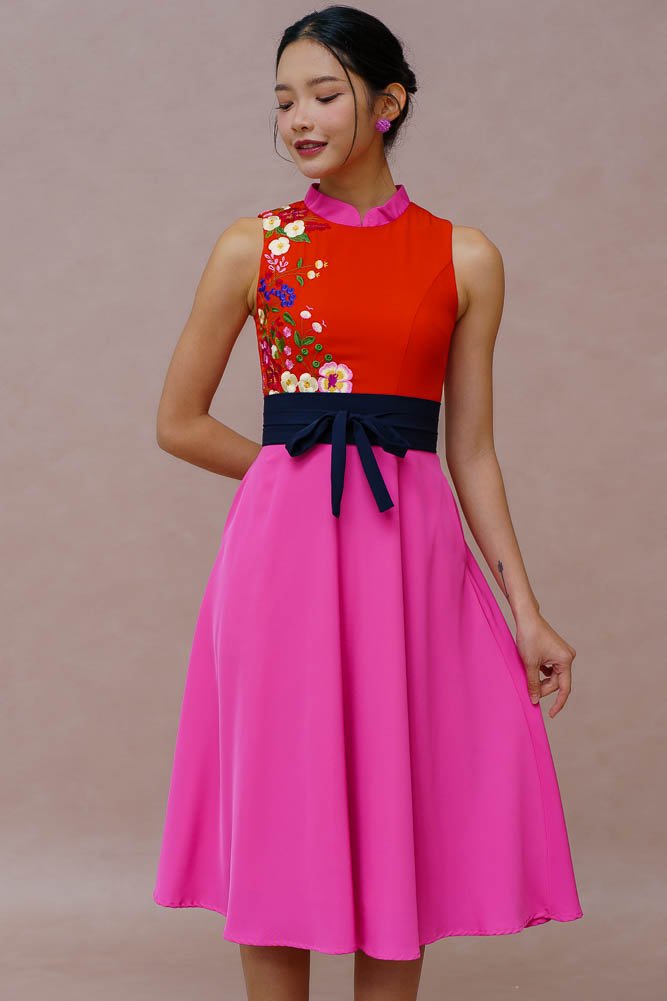
✦ Florea Sonata Embroidery Cheongsam Dress, Crimson Blush
An embroidered cheongsam in a delicate crimson blush, treat as you would any embellished silk-blend garment: dry clean or very careful hand wash. |
Also Read: How to Style a Cheongsam
Washing Your Cheongsam: Step by Step
For most cheongsams, hand washing is the method of choice when dry cleaning is not necessary. Follow this sequence:
Fill a clean basin with cold water. Add a small amount of pH-neutral or silk-specific detergent, avoid standard laundry detergent, which has alkaline properties that can damage delicate fibres and strip colour from batik.
Submerge the cheongsam and gently swish it through the water. Do not rub, scrub, or wring the fabric at any point. Rinse thoroughly with fresh cold water until no detergent remains.
To remove excess water, place the cheongsam flat on a clean, dry towel and gently roll the towel around it. Press lightly. Never wring or twist.
Machine washing is only appropriate for confirmed cotton or polyester-blend pieces, on a delicate cycle, inside a mesh laundry bag. If you are unsure of the fabric content, do not machine wash.
A Special Note on Batik Cheongsams
Turn your batik cheongsam inside out before washing to protect the surface of the print. Use cold water only, warm water can cause the wax-resist dyes to bleed. Do not soak the garment for longer than necessary, and handle it gently throughout.
|
✦ Dream of a Thousand Mansions Batik Cheongsam Dress, Oxblood
A richly coloured batik cheongsam, wash inside out in cold water, no soaking, and dry away from direct sunlight to preserve the depth of the oxblood tones. |

Also Read: Different Styles of Modern Cheongsams
Drying: What to Avoid
Never use a tumble dryer. The heat and mechanical movement will cause silk, brocade, and lace fabrics to shrink, stiffen, or distort permanently. There are no exceptions to this rule.
Never hang your cheongsam in direct sunlight. UV exposure fades colour, particularly on silk and batik, and weakens the fibre structure over time. This is especially relevant in Singapore, where sunlight is intense year-round.
The preferred method: hang on a padded hanger in a shaded, well-ventilated area, or lay flat on a clean dry towel. For delicate pieces, laying flat prevents the weight of the wet fabric from pulling on the seams and distorting the collar.
Also Read: What Is a Cheongsam?
Ironing, Steaming and Maintaining Shape
Steaming is the gentler and generally preferred method for removing creases from a cheongsam. A handheld garment steamer works without direct heat contact, particularly important for embellished areas, frog buttons, and the collar.
If ironing is necessary, use a low heat setting only. Always place a clean cotton pressing cloth between the iron and the fabric, never apply a hot iron directly to silk, embroidery, or any embellished section. Iron along the grain of the fabric, not against it.
Do not spray water directly onto silk. The concentrated moisture can leave permanent water marks, particularly visible on lighter-coloured pieces.
For the collar and frog button closures: steam gently from a distance and reshape by hand while the fabric is still slightly warm. Do not press these areas flat with an iron.
|
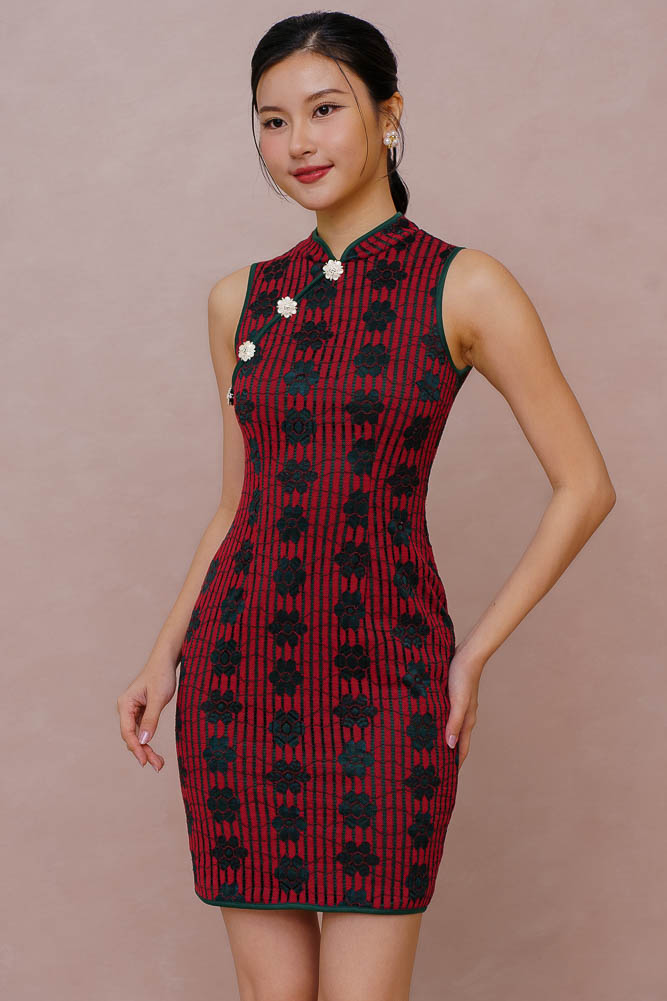
✦ Shanghai Rose Lace Cheongsam Dress, Wine
A lace cheongsam like this is best steamed rather than ironed, the open lace structure can distort under direct heat. Steam gently and reshape by hand. |
Storing Your Cheongsam: Especially Between Seasons
This is where Singapore's climate makes a real and specific difference. At 85% or higher humidity for much of the year, improper storage creates genuine risk of mildew, discolouration, and fabric damage.
The most important rule: ensure your cheongsam is completely dry before storing it. Any residual moisture combined with Singapore's humidity creates ideal conditions for mildew.
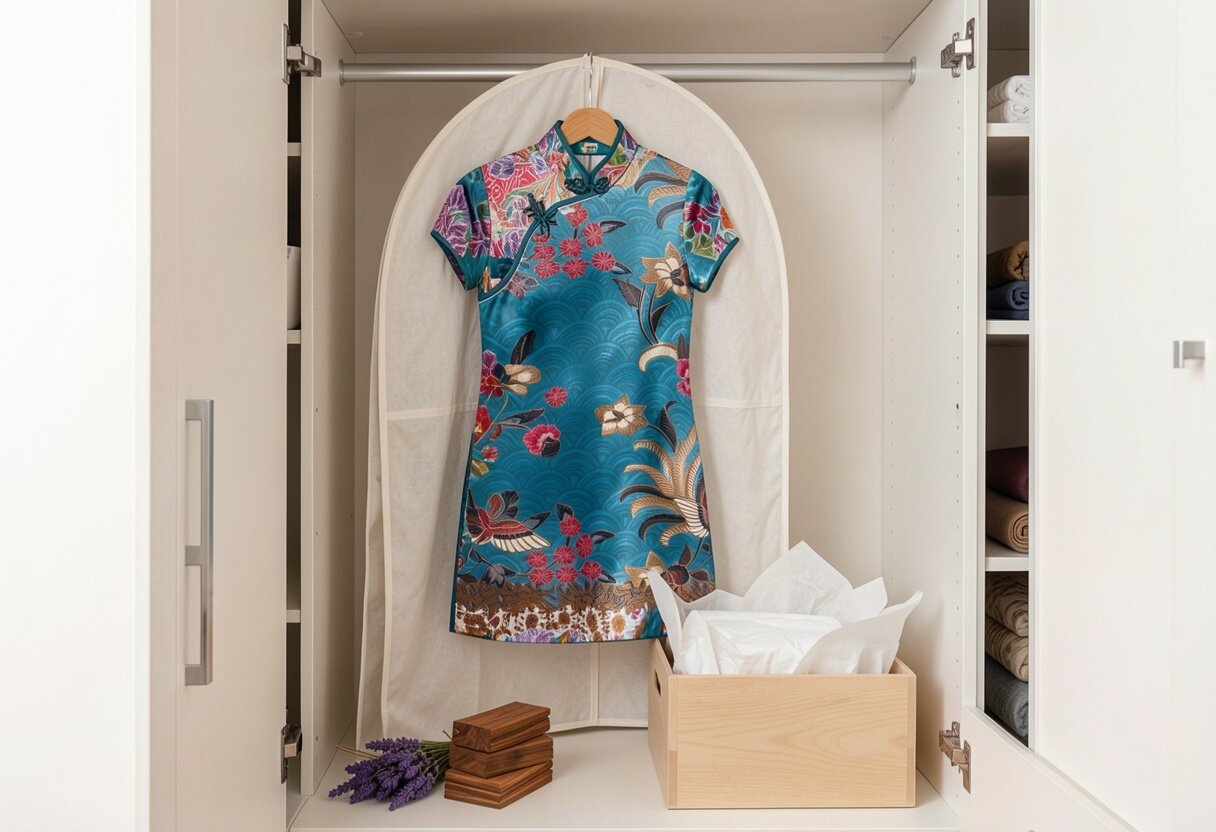
Hanger choice matters. Use a wide, padded or wooden hanger to support the shoulder shape and collar. Wire hangers will distort both over time, particularly for fitted silk and brocade pieces.
Breathable garment bags only. Store your cheongsam in a cotton or canvas garment bag. Plastic bags trap moisture and create conditions that lead to mildew and fabric discolouration.
For longer-term storage between festive seasons, fold the cheongsam and layer with acid-free tissue paper to prevent deep creasing. Add a small cedarwood block or dried lavender sachet to deter moths, a genuine consideration in Singapore's warm climate.
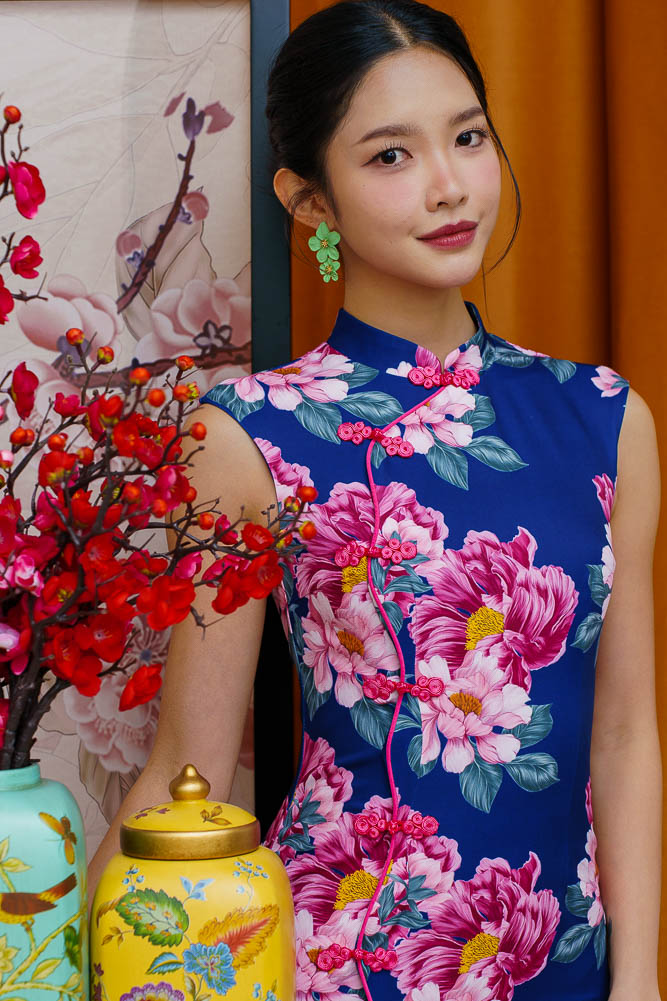
|
✦ Moonlit Peony Front Slit Cheongsam Dress, Navy
A structured navy cheongsam stores beautifully on a padded hanger in a breathable garment bag, ensuring the silhouette holds its shape between wears. |
Small Maintenance Tips Worth Knowing
Loose frog buttons: Do not pull or force them. Take the garment to a seamstress for re-stitching. Frog buttons are intricate to make, a few minutes of professional repair is far preferable to replacement.
A sagging collar: Gentle steaming and careful reshaping by hand while the fabric is still warm can often restore it. For persistent collar issues, a tailor can reinforce the internal structure.
After wearing: Air out your cheongsam in a ventilated space before returning it to storage. Placing a worn garment directly back into a closed bag traps perspiration and speeds up fabric degradation.
Spot cleaning: For minor marks on a non-washable fabric, dab very gently with a damp cloth rather than rubbing. Work from the outside of the mark inward to avoid spreading it. For anything more significant, take the piece to a professional.
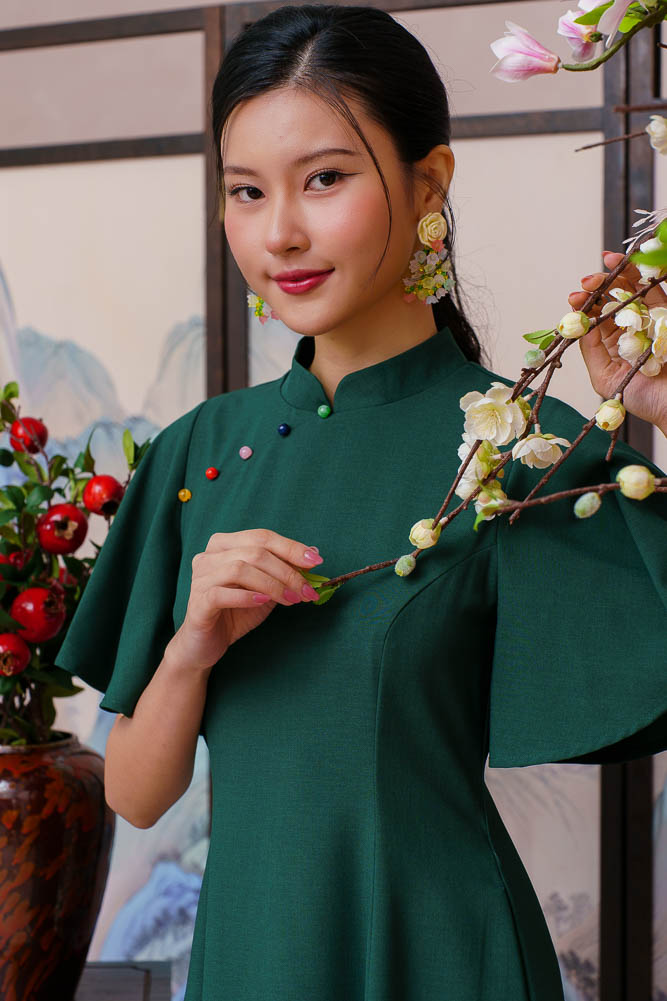
|
✦ Golden Thread Flutter-Sleeved Cheongsam Dress, Dark Jade
A flutter-sleeved cheongsam with delicate detailing, steam rather than press to avoid flattening the flutter shape. |
A well-cared-for cheongsam holds its shape, its colour, and its elegance across years of wear. Explore Faire Belle's cheongsam collection for pieces designed to wear and cherish for years to come.